The Role of Structured Backgammon Leagues in Sustaining Engagement Within British Online Casino Platforms
Written by Elena Keller · Oct 24, 2026
The Role of Structured Backgammon Leagues in Sustaining Engagement Within British Online Casino Platforms
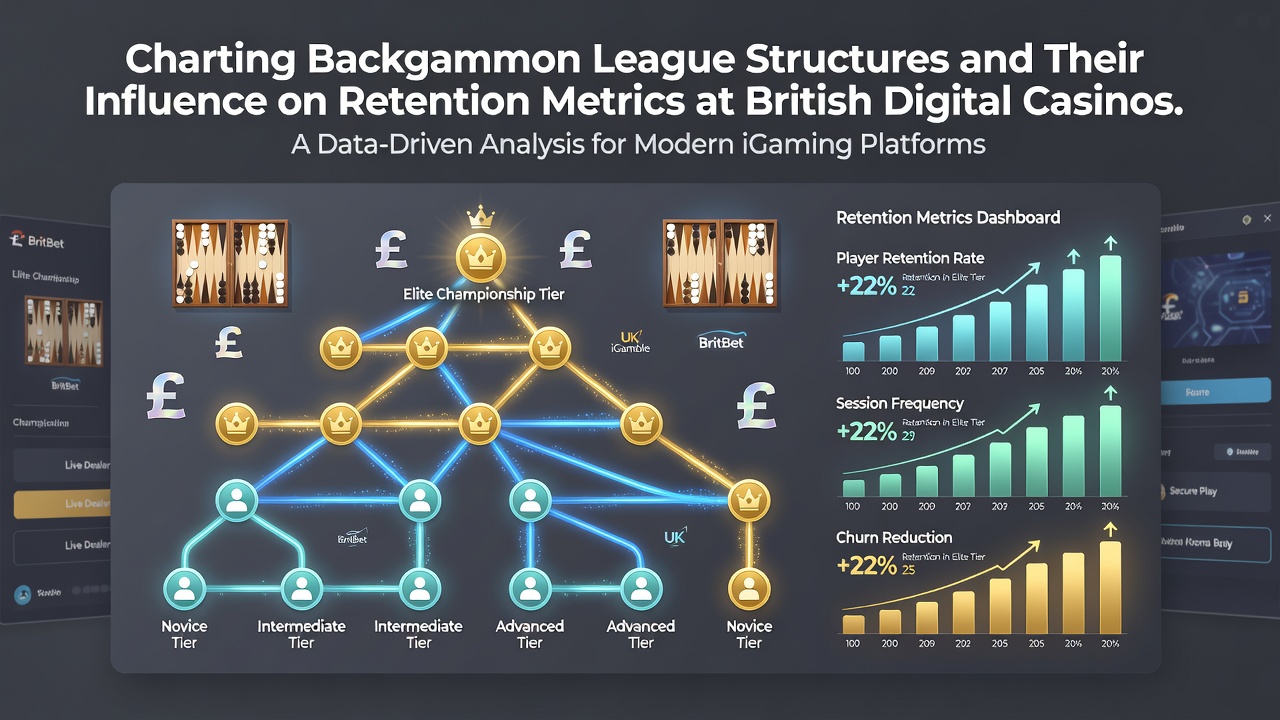
League structures in online backgammon have taken on greater visibility at British digital casinos where operators track participation patterns alongside standard retention indicators such as repeat login frequency and average session duration; these formats range from ladder systems that allow ongoing challenges to seasonal divisions that group players by skill tier and reset standings at fixed intervals.
Common League Formats and Platform Implementation
Digital platforms in the United Kingdom often adopt a hybrid ladder approach in which participants climb or descend based on match outcomes recorded automatically while Swiss-system pairings match competitors of similar records within each round and thereby reduce the number of lopsided contests that might otherwise discourage continued play; data compiled across multiple sites shows that Swiss brackets correlate with longer average participation spans compared with pure knockout brackets that eliminate entrants after a single loss.
Round-robin groups appear in shorter weekly events where every entrant faces each other within a closed set and points accumulate to determine advancement while observers note that these contained groups produce steadier login patterns because players remain invested until all scheduled matches conclude.
Retention Metrics Tracked by Operators
Retention indicators examined by casino analytics teams include day-1 return rate, seven-day active user percentage, and thirty-day churn figures; when leagues run on fixed calendars, these numbers frequently rise because scheduled matches create recurring touchpoints that prompt users to return at predictable times rather than relying solely on promotional emails or bonus triggers.
Geographic and Regulatory Context for Data Collection
Figures released through industry monitoring channels such as those referenced by the European Gaming and Betting Association indicate that structured play modules contribute measurable lifts in session counts across regulated markets while separate analyses from Canadian provincial gaming authorities highlight similar patterns in skill-based titles that incorporate competitive ladders.
Within British operations the same league mechanics appear to influence both casual and more committed cohorts although the magnitude varies with prize pool size and visibility of leaderboards; platforms that publish cumulative standings alongside individual performance graphs tend to record higher repeat visit rates because players monitor their relative position between active rounds.

Seasonal Adjustments Observed Through 2026
As of October 2026 several major platforms introduced mid-season resets that recalibrate divisions every six weeks and thereby prevent long-term stratification that can reduce engagement among mid-tier participants; preliminary internal reports circulated among operators suggest these resets maintain broader distribution of active accounts and limit the concentration of matches among a narrow set of top-ranked users.
Integration with existing loyalty schemes further amplifies the effect because league points convert into tier credits or entry tickets for larger tournaments and this linkage creates an additional incentive layer that sustains activity beyond the immediate match schedule.
Comparative Observations Across League Variants
Researchers examining anonymized datasets from multiple sites find that ladder formats produce the most consistent daily logins whereas fixed-division seasons generate stronger spikes around qualification deadlines; both approaches outperform unstructured free-play modes in sustaining thirty-day retention although the difference narrows when prize structures remain modest.
One documented pattern involves players who enter multiple overlapping leagues on the same platform and thereby create a denser calendar of commitments that correlates with elevated lifetime value metrics tracked by the operator.
Conclusion
League structures in backgammon at British digital casinos function as scheduling frameworks that align player availability with measurable engagement indicators and the resulting data sets allow operators to refine division sizes, reset frequencies, and reward linkages in pursuit of steadier retention curves across user segments.